Region · The High South
Oxfordshire
Oxfordshire is the county around Oxford, known for hidden refuges that quietly take in those the city casts out. Sayings there warn of the gate and the seal. Children of the county are sometimes sent back to kin, which raises hard questions where the kin may do them harm.
- Within
- The High South
- Holds
- 5 places, 3 directly
- Named in
- Book II, Book III, Living Britannia
History and lore
Oxfordshire is the county around Oxford, a gentle country of green river meadows, willows and honey-stone villages. Its church towers rise above the trees, and the domes and spires of the city are visible from every hill. The county was settled early in the rebuilding, and its villages are among the oldest of the High South. Its lanes run between hedges to farms and hamlets tucked away in the folds of the land. Some of those farms and hamlets take in people the city has cast out, quietly and without asking questions. Its farmhouses are built of the same honey-coloured stone as the colleges, and from a distance the villages seem to glow in the evening light.
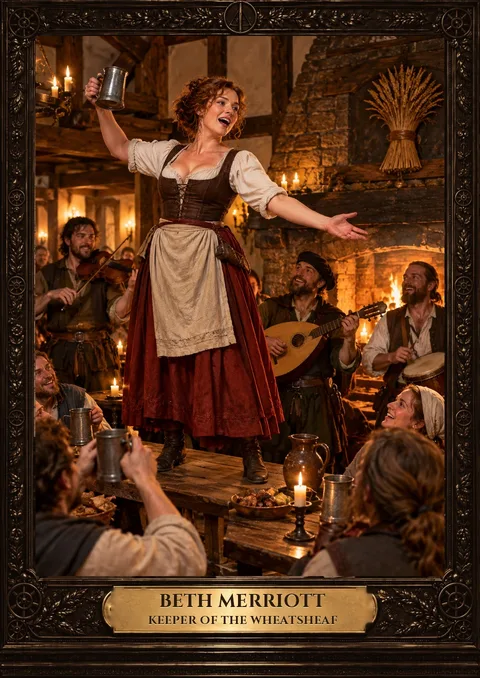
The county lives by the city, sending it corn, milk, wood and servants, and taking its trade and its tithes in return. Little Wendle and its inn, the Wheatsheaf, are typical of its villages, and Beth Merriott keeps the inn as her mother kept it. The carriers pass through the villages on fixed days, and the carriers' songs are sung in the inns. The hidden refuges of the county form a recognised family of households, hamlets and religious houses, and those who need them know where they are. Brother Alwin of the Hidden Lamp is remembered as the saint of those refuges. The river carries barges of stone, timber and grain down to the city, and the towpaths are busy from dawn to dusk.
The county's proverbs speak of the gate and the seal, the two powers of the city that can close a life. The city's officers would like to know where the refuges are, and the county would like them not to. Now and then a child of the county is returned to its kin, and the parishes argue over whether to send a child to kin who may harm it. Parish clerks such as Thomas Cheverell of Little Wendle keep careful records and know exactly what not to write down. The county is peaceful, but its peace is kept by a great deal of discretion. The city sometimes sends men to search, and they come back having found nothing and been fed very well.
A company travelling through Oxfordshire will find good inns, quiet lanes and friendly villagers. It should not ask about the refuges, and if it is shown one it should forget the way. A company hired to find someone who has disappeared from the city should know that the county will not help it. A company that needs a refuge itself may be helped, if it asks the right person in the right way. It should never mention the refuges in the city, because the city has long ears and short patience.
Where the volumes speak of it
- Book II › Chapter 29 — Employments, Patronage, and Doors into the Capital › 29.8 Regional search, escort, and return errands
- LiB1 › Chapter 17 — Dress and Speech › 17.8 Oaths and Unsaid Things
Powers seated here
Faces found here



Within Oxfordshire
 VillageHatherwick Saint GilesHatherwick Saint Giles is a valley parish in the belt about Oxford. The new tenor bell cast for its church by Neale's Yard cracked at its first full peal, and the vestry…Village · 1 withinLittle WendleLittle Wendle is an Oxfordshire village whose single inn is the Wheatsheaf, run by one woman. A stranger pays sixpence to share a bed and eightpence for supper. A guest…
 Region · 1 withinThe Tithe ValleysThe authority of the Golden Sheaves here rests on feeding the realm, and is doubted whenever the realm goes unfed. The valleys tell of the Granary Wolf and, a generation…

