Region · The High South
Chalk Wold
The Chalk Wold is the chalk upland of the High South, crossed by some of the oldest drove roads in the belt, which the drover courts of Sarrum govern. Its sheep country supplies the wool clip, and perhaps sixty free-family halls are concentrated here and along the northern hangers.
- Within
- The High South
- Holds
- 42 places, 29 directly
- Named in
- Book III, Book IV
History and lore
The Chalk Wold is the high chalk country of the High South, a great rolling upland of open turf, beech hangers and wide skies. It was sheep country before the rebuilding and has stayed sheep country since, because the thin soil will bear little else. Drove roads older than any in the belt cross it, broad green ways marked by standing stones and dew ponds that no one remembers making. The free families settled here early, building their halls of flint in the shelter of the northern hangers. Their descendants still hold perhaps sixty of those halls, and are proud of every one. Their halls are built low and long, with walls of knapped flint and roofs of stone tile, and many still have the family's name cut over the door.
The wool clip of the Wold is the wealth of the upland, and its shearing is the great event of the year. Flocks move along the drove roads under the eye of the drover courts at Sarrum, and shepherds and their dogs are seen on every skyline. Quarries cut into the chalk and the stone beneath it, and the Deepcut is the largest of them. The water of the Wold is precious, and the Water Court keeps its reaches and its rights with care. Villages huddle in the combes, out of the wind, and each keeps its own church, mill and pond. In early summer the shearing gangs move from hall to hall, and the wool is carted down to Sarrum in great swaying loads.
The free families quarrel with the great estates about grazing, and with each other about everything else. The drover courts settle the disputes on the roads, and the Water Court those over springs and ponds. Alice Prowse, water-bailiff of the Sarrum reach, keeps the reach book and is consulted more than any magistrate. The quarry-masters and the shepherds dispute the turf where the cuttings spread. Land agents such as Simon Ferrars of Long Coombe buy and sell on behalf of absent owners, and the free families watch them closely. The quarrels are old and well remembered, and the families keep the papers of every settlement in iron chests.
A company travelling the Wold should keep to the drove roads, water only where the drovers water and ask at the halls for shelter. It will be welcomed if it is courteous and watched if it is not. A company hired to settle a quarrel over water should begin at the Water Court and read the reach book before it speaks. A company crossing the upland in winter should know that the chalk is bare, the wind constant and the next village always further than it looks. A company asked to escort a wool train should expect slow going, long days and a warm welcome at every hall along the way.
Where the volumes speak of it
- Book III › Chapter 3 — The Thames Corridor, the Marsh, and the Roads Between
- Book III › Chapter 18 — The Four Houses, the Small Nobility, and the Clearance Roll
- Book IV › Chapter 5 — The Halls, the Bank, and the Walls Outside
- Site › Chronicle of the Realm › Founding of the Chalk Wold Water Court
- Book III › Chapter 1 — The High South at a Glance › 1.3 The Hangers, the Pits, and the Woo
- Book III › Chapter 1 — The High South at a Glance › 1.3 The Hangers, the Pits, and the Woods
- Book III › Chapter 1 — The High South at a Glance › 1.5 The Water Court and the Chalk Sour
Powers seated here
In the Chronicle
Faces found here

Within Chalk Wold
Abandoned ruin
 Abandoned ruin · Feral groundDunsham BottomThe wells and the dew pond went together, the beasts sickened in the same weeks, and the Water Court heard the matter and established nothing. Land fell in value,…Abandoned ruinStone PyleStone Pyle is a village on the southern droves of the Chalk Wold. With Marlow Bridge and Great Ashen it earned its living from passing herds, and it lost that living…
Ancient ruin
Fortress
Hamlet
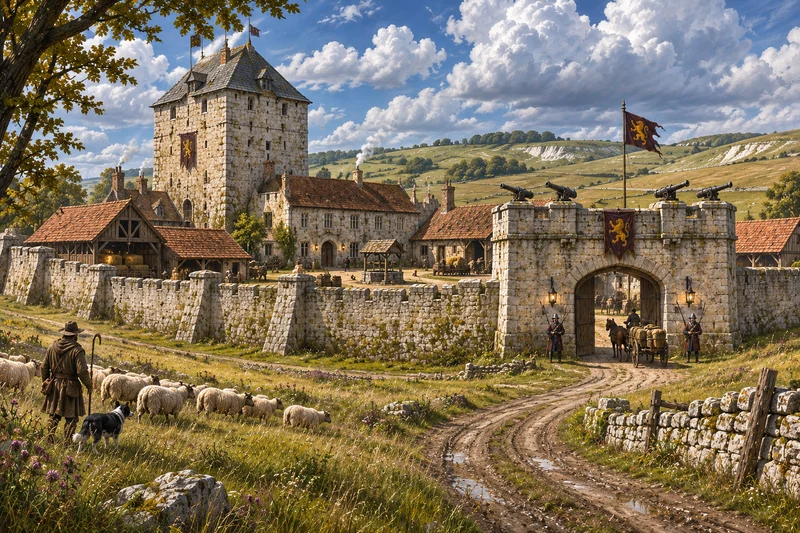
 HamletBramble HollowMother Elinor Sorrel learned the work here from old Mother Gillow and has kept it since. Farm families come with sick children, lame beasts and questions they would not…HamletHatch GreenHatch Green is a few farms and a chapel on the road four miles from Long Coombe, with drover families among its people. Ezekiel Pound, respectable churchwarden and…
Haunted ground
Hill and down
Hill and downAshdown HillIn 4617 a young guard drew on the highwayman here, and Starling rode him down instead of firing and broke his own wrist in the fall. He lay six weeks in Martin Hale's…Hill and downRook CombeRook Combe is a combe that runs southward off the Wold and fills with water only in severe winters. People of the quiet country use it as a landmark, along with Nine…Hill and down · Feral ground · 1 withinThe Upper WoldThe emptiest country in the High South, roughly nine miles by four of turf, sheep, wind and stone above Wold Ash. Forty-one barrows crown its ridge and spurs; shepherds…Hill and down · 1 withinThe Wold shoulderThe Wold shoulder is the edge where the chalk meets the coalfield, running between the Chalk Wold and the Sarr valley. Four bournes there have shortened because of…House and estate
House and estateAshby Parva HallLady Win has ruled Ashby Parva for nearly forty years from this house and holds the better half of the land between it and Wexcombe. She paid for the schooling of…House and estateHalse BottomSir Roger Halse, knight of the shire, was born here in 4576 and holds Long Coombe of Earl Stanway as his family has for a century. The house is comfortable rather than…House and estateStanway CourtEarl Hamon Stanway was born here in 4559 and has never wanted to live anywhere else. Long Coombe lies within his fee, so he stands over its headman as overlord to his…House and estateStarling CourtSir Edmund Starling struck his eldest son Thomas from the family Bible for marrying a tradesman's daughter, and his younger son Harry took to the road. The house is…River and water
Town
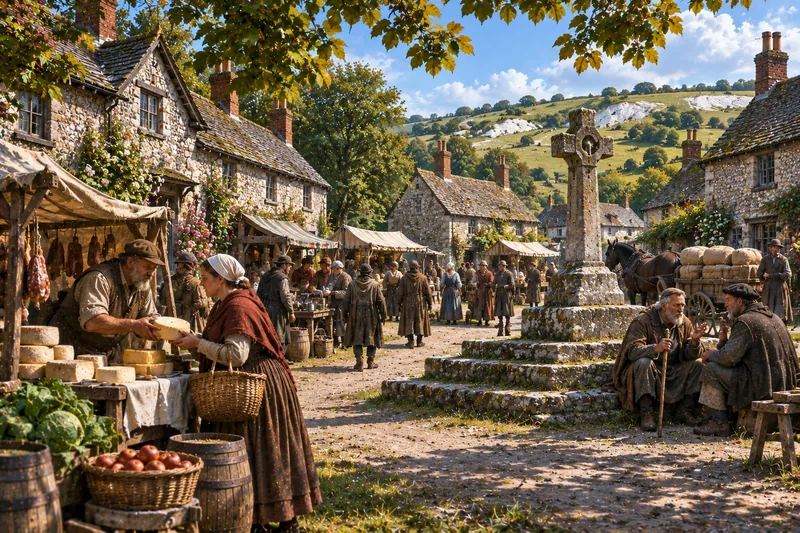 TownChalk MardenA township of some nine hundred people at the point where the chalk parishes reach the Wold road. It has a cross and a Thursday gathering that functions as a market…
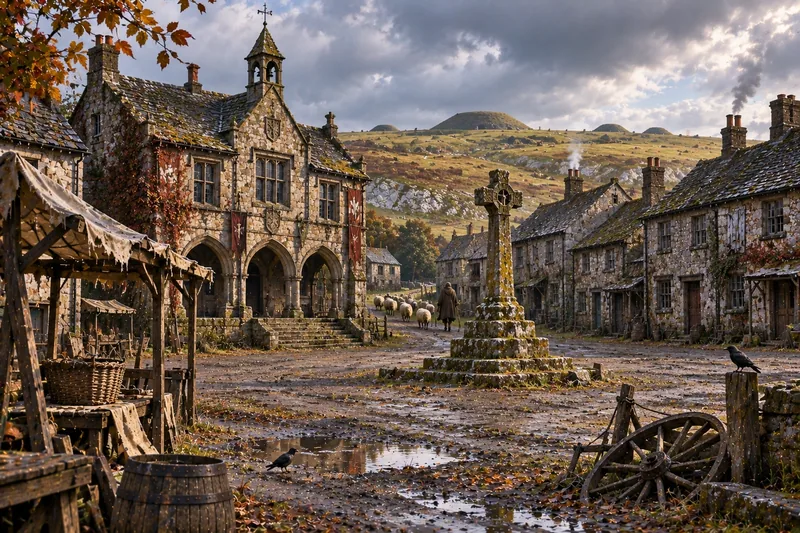 TownWold AshA town of about eleven hundred on the Wold shoulder whose charter lapsed beyond memory. Its borough book is still kept by a succession of aldermen with nothing left to…
Village
Village · 5 withinBlackdownBlackdown is a company pit village of the coal country, one of the foundations of the coal expansion, with no vestry and no old parish behind it. Green coal lies in…VillageGreat AshenGreat Ashen is a village on the southern droves of the chalk wold which lived off passing herds. With Marlow Bridge and Stone Pyle it provided for the drovers: a single…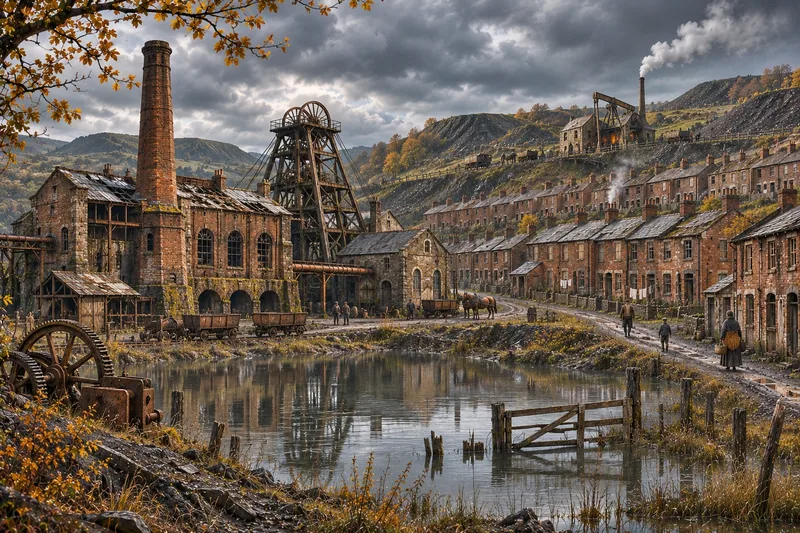 Village · 1 withinIronmereA furnace settlement built on a bloomery site, once eleven hundred strong and now about six hundred. Its lode failed in 4597 and four hundred people took the southern…Village · 1 withinLinchcombeLinchcombe is a village on the Upper Wold with a mill lane and a north field. Four houses along the lane have slept badly for a year and the stock in the north field has…VillageLong CoombeMartin Hale of Hale's Farm is its headman, the agent Simon Ferrars squeezes the rents, and the village forge is kept by the farrier whose grandson Jude Starling is…VillageMarlow BridgeMarlow Bridge is a village on the southern droves of the chalk wold. It supported inns, smiths and the other trades that look after a herd for a night, and depended on…VillageRedlodeRedlode is an iron-working village on the western shoulder of the Chalk Wold. Its mines follow veins through the country rock wherever the ore ran, and four generations…VillageShepcombeWalter Dunning, called the Book, is its reeve and writes every sale and burial in a hand his grandfather would know. In 4614 a failed farm at Shepcombe Bottom was bought…Village · 1 withinWexcombeGiles Ashby, its reeve, sold the parish's boundary field to a builder against the warning of Gethin Marrable, the warden of the quiet ground. Lady Winifred Ashby-Lyle of…
Works and stores
Works and stores · 1 withinThe Deepcut QuarriesThe biggest quarry in the High South, on the northern edge of the Wold, employing three hundred men at the busy season and supporting a hamlet of some four hundred with…Works and storesNew LodeA mine workings whose captain keeps a workings book, with entries dated from Redlode. Its neighbour Ironmere was abandoned after 4597, leaving standing water over the…
